
Igors Tereško on Volunteer Work in Prisons
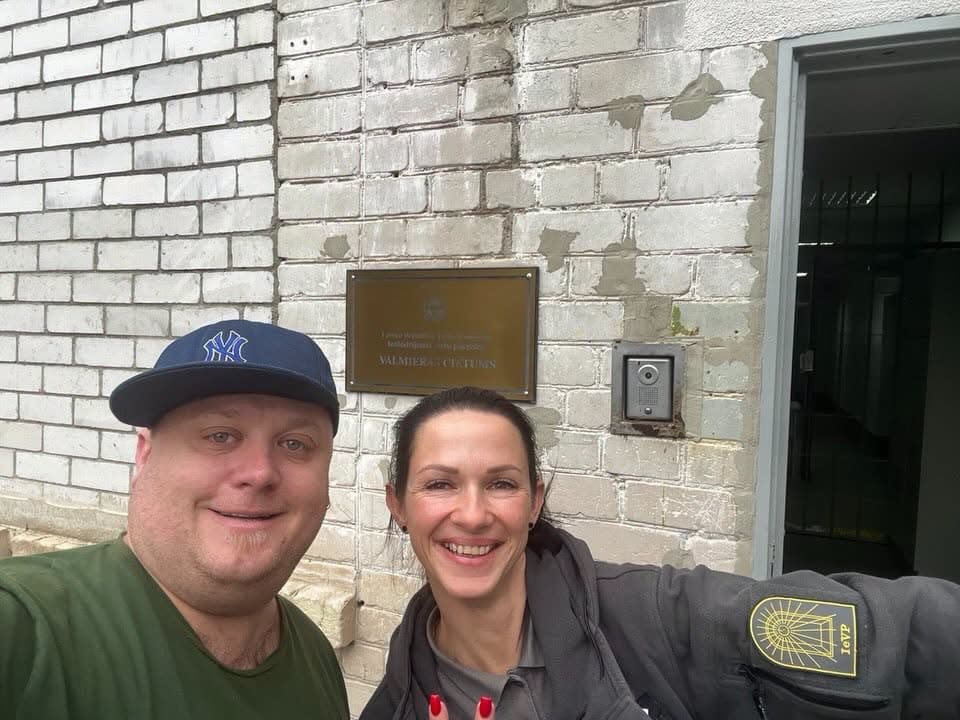
Tell us a little about yourself—how did improvisational theater come into your life, and what does it mean to you? Improvisational theater wasn’t the genre I started out with as an actor and, later, as a director. Initially, I tried my hand at classical theater—in the “Drama Class.” As is widely known, an actor’s work and lifestyle, so to speak, involve a never-ending exploration of the world around them. And, of course, it also involves mastering new acting techniques, as well as exploring as-yet-unknown schools and methods that enhance an actor’s ability to portray a character in such a way that, according to Stanislavski’s principle, the audience always believes.
There is a great deal of improvisation in acting, but dramatic theater actors rarely choose improvisational theater as a separate genre. More often, this genre is chosen by people not associated with the theater—amateurs who do it as a hobby—because in this genre, you don’t have to learn lines, and there’s no director constantly demanding the true depth of your character. Everything happens very easily.
But if you approach it professionally and your goal is to create full-length or short improvisational performances, then you have to take it more seriously, not just treat it as a hobby.
That’s how I gave it a try. I liked it. Then began the search for literature and the study of the experiences of the world’s greatest actors in this genre. And that’s how it went.
All in all, I have devoted no less than ten years to researching this genre. And so far, I don’t feel that I’ve learned enough. Just when it starts to seem like you’ve discovered everything there is to know about this genre, a new discovery comes along, forcing you to reevaluate everything you’ve learned. And a completely new phase of research begins—but now at a much higher professional level.
The work continues.
How did the idea of bringing improvisational theater directly into a prison come about? What motivated you to put this idea into practice? As I mentioned, I’ve been involved in this genre of theater for a long time. At a certain point in my life, I felt ready not only to perform as an actor in the theater but also to try my hand at teaching acting. I decided to start a school.
To do that, I had to write my own methodology—the very approach you plan to implement at your school. That’s exactly what helped me make tremendous professional progress. Because writing your own methodology is by no means a quick or easy task.
I had to go through the literature again—which I’d already read once—and reformulate acting techniques anew—based on my own feelings and my own experience. I had to try many things repeatedly to be able to articulate them based on my own experiences. I had to repeat a lot of things in practice.
It was precisely at that moment that I also began to think about social integration programs. So that, while helping people, I could expand my knowledge and, through experimentation, document new techniques or interpret familiar ones from a practical perspective in a different, fresh way.
In general, as many, many sources attest, improvisational theater began its journey toward the style of improvisational theater we’re all familiar with precisely as a tool for social integration—helping people who had been isolated from society for a long time to return to a socially active community.
First and foremost, I am an actor and director myself. And I have my own ambitions. That’s why my classes begin with acting techniques based on psychological principles, but the end result must be entertainment. And that means performing in front of an audience, which, in my opinion, is the best way to evaluate the work that’s been done and an opportunity to assess one’s own work and its results.
Take us behind the scenes of a class—how does an improv class in a prison unfold from start to finish? Rehearsals in a prison are no different from classes for beginners at a theater. The intensity of the sessions can vary, and it almost always varies from group to group, regardless of their geographic location.
It depends on how open the group is. By that I mean—how willing each individual is to work as part of a team and how willing each is to trust their partners.
I usually divide each class into two parts: warm-ups and the second part—working on sketches.
In improvisational theater, sketches are created based on suggestions from the audience, and there are also various challenges for the actors. For example, during a sketch, actors aren’t allowed to use a certain letter of the alphabet.
You can describe a rehearsal very simply like this. In fact, warm-ups play a very significant role throughout the entire rehearsal—from start to finish.
In the so-called first part, actors perform various exercises aimed at training attention, memory, partnership, general knowledge, the basics of communication, and empathy.
This often takes place through various games. For example, asking an actor to perform a continuous action while simultaneously speaking about an unrelated topic often causes, so to speak, “system errors” in which the actor’s action or spoken lines become jumbled.
And when we complicate the process by having them switch from one action to another on command—without interrupting their lines—it becomes quite difficult.
But over time, we develop these skills to the point where they come absolutely naturally, effortlessly, very harmoniously, and even with a certain charisma.
The main rule is: you have to try. Because the only thing you can do wrong is to do nothing.
In improvisation, there is no pre-written script. How do participants react when they have to be spontaneous, open up, and dare to make mistakes in front of others? Improvisation is an art that unfolds in real time, right on the spot, and absolutely nothing is prepared in advance—except for your ability to accept absolutely any circumstances and conditions.
Of course, at first there tend to be questions—why don’t I set some rules for the game? And then people express themselves however best they can.
But it turns out that expressing yourself without preparation—and doing so in a way that sparks the audience’s interest as they watch you—is a long road to travel.
Of course, I always give people the chance to try and prove me wrong. But so far, everyone has agreed that we should at least try to walk that long road.
And, as they embark on this journey, everyone discovers a range of very useful skills—applicable in everyday life—that we’ve forgotten or simply stopped using. This makes the journey to the stage even more valuable.
As I’ve already said, in improv, it’s not about giving yourself permission to make mistakes. The only possible mistake is to do nothing.
In improv, it’s about “giving yourself the chance to act.” Just follow the cues from your partners that will drive the story forward, creating joy both for ourselves and for the audience—again and again.
In improvisational theater, listening, collaboration, and accepting your partner’s input are important. How do you think these skills can help a person outside of class as well? As I mentioned, the skills we practice for a long time before we even start performing sketches are important for everyone.
I try to create or select all exercises aimed at developing various skills in such a way that, when performed, they evoke feelings that align with the basic instincts we’ve had since birth.
These instincts have shown us the right path for centuries.
I give students the opportunity to try out different techniques to achieve a result, and then each person decides for themselves whether it works for them or not, based on the inner sensation that arises in them at that moment.
Of course, we also have brief discussions about what we’ve done to thoroughly clarify what we felt when acting one way or another.
Through such exercises, we gradually move toward role-playing a scenario that simulates an everyday situation.
And the experience we’ve just gained—listening to our instincts—clearly tells us how we should intuitively behave. By picking up on our partner’s cues, it becomes absolutely clear to us how to act in whatever situation has just arisen.
This approach has proven to be very effective.
By practicing the skills of observing and interpreting information from other people or circumstances, we are greatly aided in making the right decisions, which are useful in absolutely every situation in life and in family relationships.
What’s the best thing about volunteering in prisons? Directors really hate it when an actor is late for rehearsal, but that practically never happens here.
Everyone always arrives on time for rehearsals, and I also really like that cell phones don’t distract any of the participants.
What have you learned from the people you’ve met in prison? I can’t say I’ve learned anything, but rather that I’ve debunked the stereotypes I’d heard before—that people in prison are “some kind of people” you should avoid and under no circumstances should you be left alone in a room with them.
They’re just like people anywhere else.
Everyone has their own reasons for being there, including me when I come to rehearsals at the prison.
What do you find most challenging about this volunteer work, and how do you overcome these challenges? I always prepare for rehearsals and think through what we’ll do as a group. But, as is typical of improvisation, I have to admit that I change my own plan during rehearsal based on what I observe in the group and what the group’s mood is like.
Sometimes I feel like suddenly using audio recordings, lighting effects, or other elements—as is common in a theater setting—but in this case, if you haven’t planned it in advance, it’s not feasible.
How did the idea come about to bring improvisational theater directly into a prison? What motivated you to put this idea into practice? In improv, the only thing that can go wrong is doing nothing.
Just go for it.
I see absolutely no reason to shy away from this work. It’s a great opportunity to develop my professional skills in a real-world setting.
https://www.ievp.gov.lv/lv/igors-teresko-par-brivpratigo-darbu-ieslodzijuma-vietas?fbclid=IwY2xjawT6hghwZG9mBWV4dG4DYWVtAjEwAGJyaWQRMDJWTHIwNHFRdlZZcTdPMkdzcnRjBmFwcF9pZBAyMjIwMzkxNzg4MjAwODkyAAEeePddzg7IliRpZE9MdWlhhFCUtQjHDXgtgeoKQH1_j7dG3CdXSQbCwGkDGIA_aem_T3cauPgOK90fy_YaV7ge4A